Exploring GAN Architectures on the RetinaMNIST Dataset: A Deep Dive
Posted on April 9, 2025
Introduction
Generative Adversarial Networks (GANs) have dramatically reshaped the field of generative modeling. By pitting two neural networks, a generator and a discriminator, against each other in an adversarial contest, GANs have enabled the creation of images, music, and even text that closely resemble real-world data. In this blog post, we take a comprehensive look at three prominent GAN architectures: Least Squares GAN (LS-GAN), Wasserstein GAN (WGAN), and Wasserstein GAN with Gradient Penalty (WGAN-GP). We evaluate their performance on the RetinaMNIST dataset, using key metrics such as the Inception Score (IS) and Fréchet Inception Distance (FID) to highlight their strengths and nuances.
Understanding GANs and Their Uniqueness
What Are GANs?
At its core, a GAN consists of two competing networks:
- Generator: Crafts synthetic images (or other data) from a random noise vector.
- Discriminator (Critic): Evaluates images to determine if they are real (from the dataset) or generated.
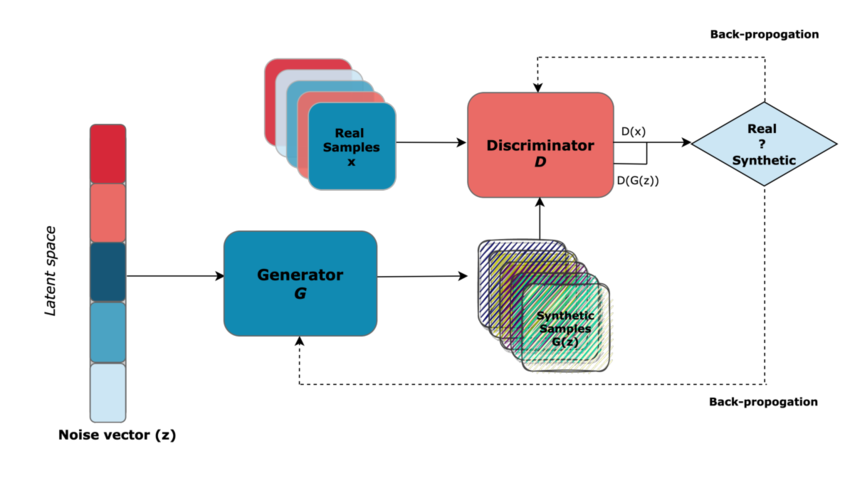
This setup forms a zero-sum game where each network’s improvement forces the other to adapt, leading to increasingly realistic outputs over time.
Why Are GANs Different?
The creativity behind GANs lies in their adversarial training strategy:
- Dynamic Learning: Unlike traditional models that simply minimize a loss function, GANs create a dynamic environment where both networks evolve simultaneously.
- Loss Function Variations: The choice of loss function greatly influences training dynamics. Different GAN variants use different losses and regularization techniques to improve stability, convergence, and output quality.
- Diverse Applications: From generating high-quality images to synthesizing novel art, GANs have diverse applications that benefit from their inherent ability to learn complex data distributions.
The RetinaMNIST Dataset
The RetinaMNIST dataset is a subset of the MedMNIST collection and is specifically designed for medical imaging tasks. Key characteristics include:
- Image Size: 28×28 pixels.
- Preprocessing: Pixel values are normalized to the range [-1, 1].
- Image Format: Grayscale images with a single channel (dimensions 28×28×1).

This dataset provides a challenging yet manageable testbed for comparing GAN architectures, particularly in the context of medical image synthesis.
A Closer Look at GAN Architectures
1. Least Squares GAN (LS-GAN)
LS-GAN introduces a modification of the traditional GAN loss by using a least squares loss function. This approach offers several advantages:
- Smoother Gradients: By reducing the likelihood of vanishing gradients, LS-GAN facilitates a more stable training process.
- Enhanced Image Quality: The smoother gradient flow often results in crisper and more detailed images.
- Architecture: Typically involves multiple convolutional layers with batch normalization in both the generator and discriminator, allowing for better feature extraction and synthesis.
2. Wasserstein GAN (WGAN)
WGAN replaces the conventional binary loss with a loss based on the Wasserstein distance, providing a mathematically meaningful measure of the difference between two probability distributions. Key points include:
- Wasserstein Loss: This loss function helps in quantifying how far the generated data distribution is from the true data distribution.
- Training Stability: Empirical evidence shows that WGAN can be more stable and less prone to issues such as mode collapse.
- Critic Architecture: Unlike typical discriminators, the WGAN critic is designed without batch normalization, as preserving the Lipschitz continuity is vital for the Wasserstein formulation.
3. Wasserstein GAN with Gradient Penalty (WGAN-GP)
WGAN-GP builds on the WGAN framework by adding a gradient penalty term. This enhancement:
- Enforces Lipschitz Constraint: The gradient penalty helps maintain the required Lipschitz continuity without the need for harsh weight clipping.
- Improved Stability: Leads to smoother training dynamics, although it increases the computational complexity during training.
- Architecture Similarity: Shares architectural similarities with WGAN, with the primary difference being the incorporation of a gradient penalty in the training loop.
Training Details
For our comparative study, the following training setup was uniformly applied to all models:
- Epochs: 50
- Batch Size: 64
- Noise Vector Dimension: 100
- Optimizer: Adam (Learning Rate = 0.0002, β₁ = 0.5)
Additionally, for WGAN and WGAN-GP, the critic was updated five times for every generator update. This strategy ensures that the critic remains robust, providing a reliable gradient that guides the generator’s improvements.
Evaluation Metrics
Evaluating the quality of GAN-generated images is challenging. Two metrics commonly used are:
Inception Score (IS)
- Purpose: Quantifies the clarity and variety of the generated images.
- Mechanism: A pre-trained classifier predicts class labels for the images, and the score is derived from the confidence and entropy of these predictions.
- Interpretation: A higher IS suggests images that are both high quality and diverse, although its reliability can diminish when the classifier isn’t perfectly aligned with the dataset.
Fréchet Inception Distance (FID)
- Purpose: Measures the similarity between the distributions of real and generated images.
- Mechanism: Compares the statistics (mean and covariance) of features extracted from a pre-trained network for both real and synthetic images.
- Interpretation: Lower FID values indicate that the generated images closely resemble the real ones in both quality and diversity, making this metric a strong indicator of practical performance.
Results and Discussion
The experimental results were as follows:
- LS-GAN: IS ≈ 1.00, FID ≈ 263.34
- WGAN: IS ≈ 1.00, FID ≈ 263.34
- WGAN-GP: IS ≈ 1.00, FID ≈ 333.25
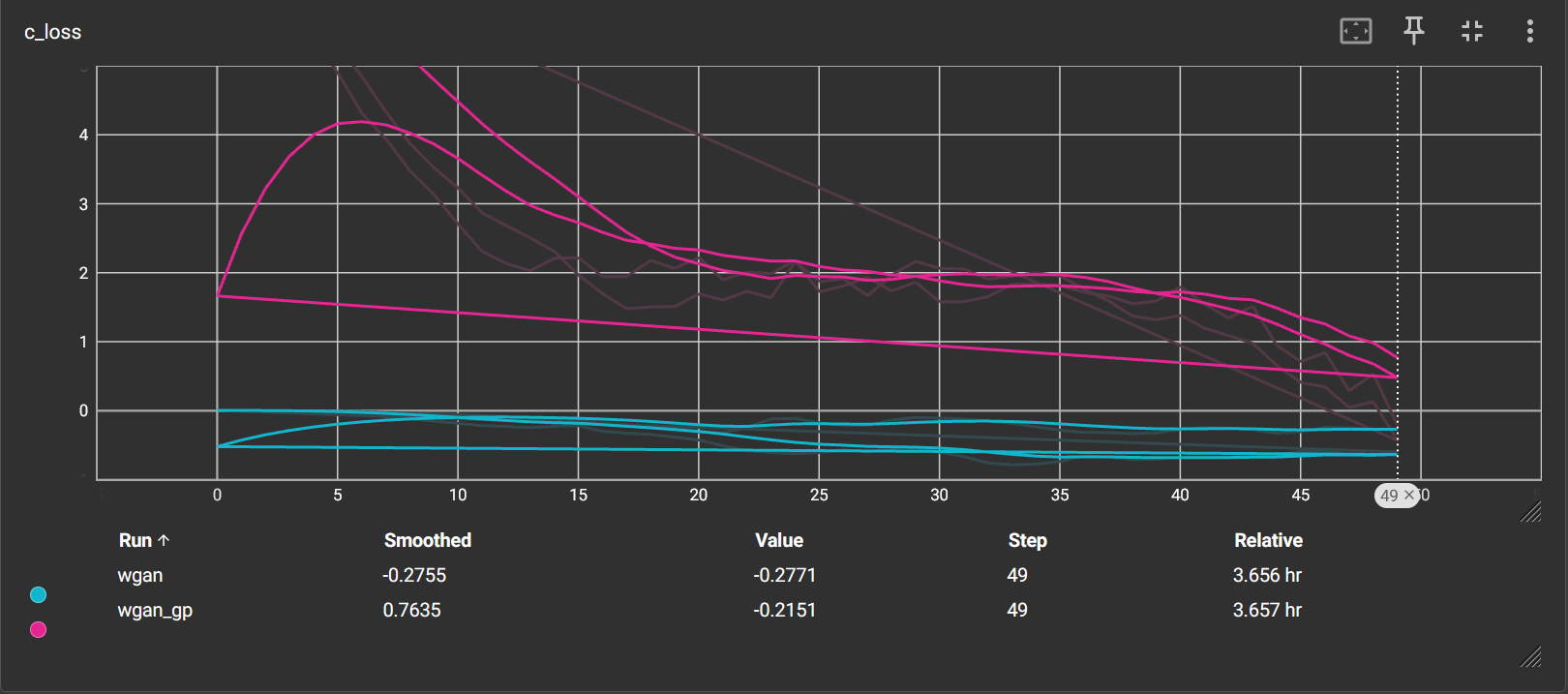
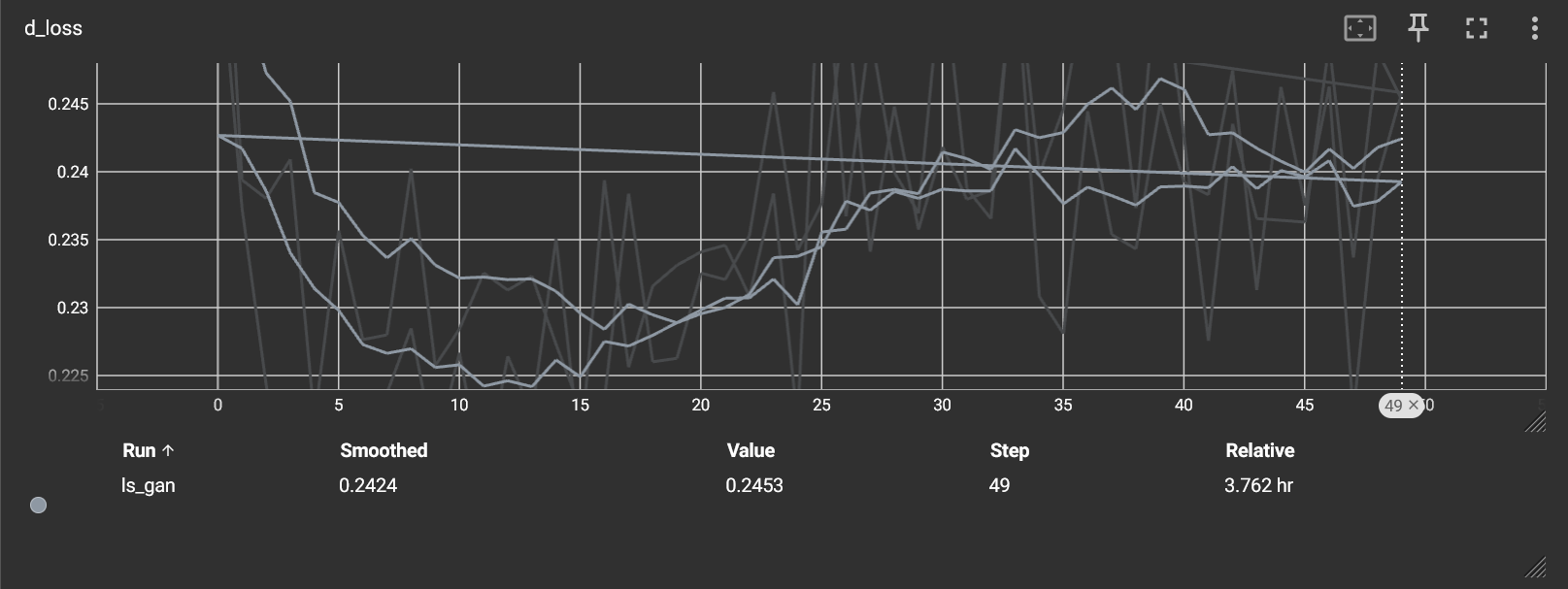
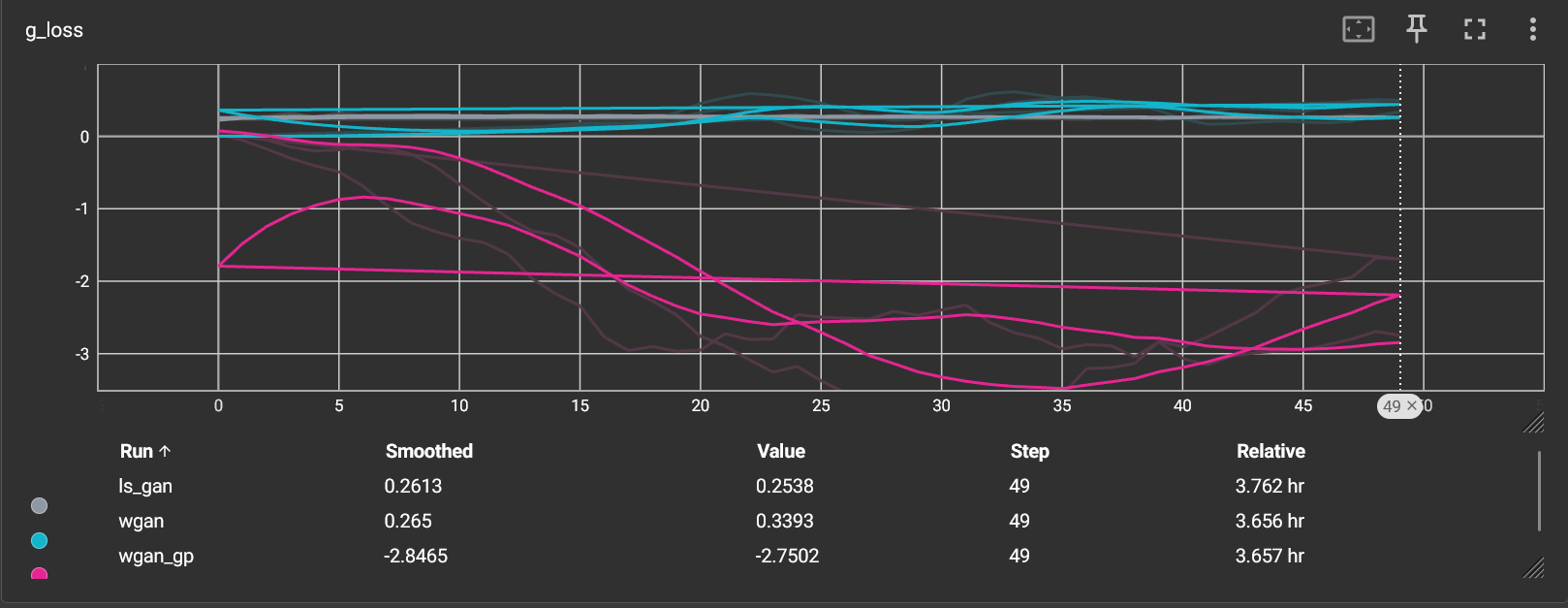
Insights:
- Inception Score Parity: All models achieved similar IS values, hinting that the overall image clarity and diversity were comparable.
- FID Differentiation: The lower FID of LS-GAN suggests that its images more faithfully capture the distribution of the real retinal images compared to WGAN-GP.
- Training Dynamics: The stability observed in LS-GAN can be attributed to its least squares loss, which provides smoother training gradients, whereas the theoretical benefits of WGAN and WGAN-GP are more evident in other contexts or with more complex datasets.
Conclusion
The detailed comparative analysis highlights that LS-GAN provides a robust framework for generating retinal images from the RetinaMNIST dataset. Despite the conceptual advantages of WGAN and WGAN-GP, especially in enforcing a meaningful distributional divergence, the practical performance for this particular application favors LS-GAN, as evidenced by its lower FID. The study underscores the importance of both theoretical innovations and practical training strategies in the development of generative models.
Looking Ahead: Future Directions
The realm of GANs is rapidly evolving. Future research may explore:
- Hybrid Architectures: Combining elements of LS-GAN, WGAN, and other GAN variants to exploit the strengths of each approach.
- Deeper Network Architectures: Leveraging advances in deep learning to build more sophisticated models.
- Advanced Training Techniques: Investigating alternative regularization and normalization strategies to further enhance stability and performance.
- Broader Evaluation Metrics: Incorporating additional metrics tailored to the nuances of medical image synthesis could provide a more holistic view of model performance.
References
- Heusel, M., Ramsauer, H., Unterthiner, T., Nessler, B., & Hochreiter, S. (2017). GANs Trained by a Two Time-Scale Update Rule Converge to a Local Nash Equilibrium. Link
- Gulrajani, I., Ahmed, F., Arjovsky, M., Dumoulin, V., & Courville, A. (2017). Improved Training of Wasserstein GANs. Link
- Mao, X., Li, Q., Xie, H., Lau, R. Y., Wang, Z., & Paul Smolley, S. (2017). Least Squares Generative Adversarial Networks. Link
- MedMNIST v2: A Large-Scale Lightweight Benchmark for 2D and 3D Biomedical Image Classification. Link
- A Review of Generative Adversarial Networks for Electronic Health Records: Applications, Evaluation Measures and Data Sources. Link
- MedMNIST Data link